
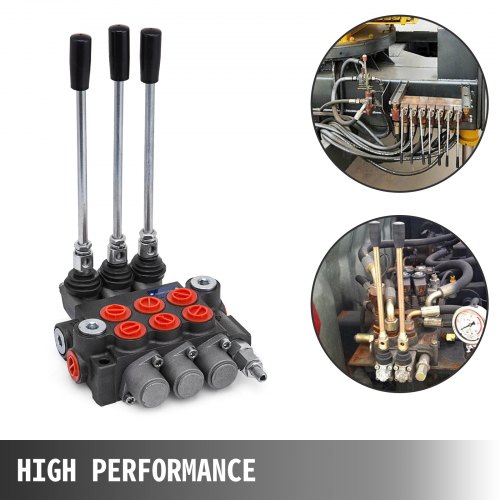
The Choice Between Forklift Hydraulic Motor and Electric Motor
The choice between a forklift hydraulic motor and electric motor is not just a comparison of technologies. It is a strategic choice that decides the fate of today’s consumer electronics and home appliance logistics. The consequences of this choice will determine warehouse operations, transport efficiency and the accuracy of storage; it will also involve the kind of danger to goods that might occur during transshipment.
Factors Affecting the Choice of Hydraulic or Electric Motor
There are many factors that affect the choice of hydraulic motor or electric:
The basic performance of each
Their energy efficiency
The need for maintenance
For the rest of the story, I suggest you visit http://www.txgn.com/. The site is dedicated to helping forklift truck manufacturers and parts suppliers reach the boardroom, even before they have learned to speak Mandarin.
A Case Study: Shenzhen’s New Consumer Electronics Supplier
In 2021, Shenzhen appears to have a new consumer electronics supplier. We talked with this company about how its story had been made possible.
The company was facing a product logistics nightmare. This time, the problem was worsened by delays in the transport and installation of goods (fulfillment backlog) and outmoded forklift trucks which were driving its clients crazy.
The company had long used traditional forklifts with hydraulic motors that, while hardy and maintenance-intensive, were slow. But now pressure was on, and the company decided to have nothing to do with forklifts driven by advanced electric motors.
Twelve months later, delivery was 22% faster, repairs cost a full 37% less and injuries from misuse of forklifts in the warehouse, as well as those suffered by workers who were not directly involved with using forklifts, fell to zero.
The transformation was not simply a matter of upgrading machines. It was reshaping the power grid of their operations. The significance of forklift hydraulic motor vs electric motor in that grid is what this article is to help you see.
The Core Question: Forklift Hydraulic Motor vs Electric Motor
This is not just a simple question of A vs B. It is about the application scenarios, pain points, industry changes and long-term sustainability of products–in particular for sectors such as refrigerator assembly lines, household appliance component warehousing and electronic information dissemination hubs where precision, uptime and power saving all matter. With appropriate adjustment to language and spelling.
Your strategy manual is here.
Understanding the Mating Principle
A forklift hydraulic motor is a hydraulic motor that powers mobile lifting devices. A motor as such acts by transforming the pressure of a fluid into kinetic energy away from rest, and (1) operating with direct drive; or (2) using cylinders exerting force on the working parts. Subsequent growth in forklift business can be seen technically as arising from this development as well. The new motor, breakthrough in fault tolerance capability, was understood to be decisive for high-order forklifts.
Especially in raw material and forklift cradle settings, hydraulics still dominate. But You’d Better Watch Out: When rubber meets the road, hydraulic motors—so good for lifting—run on oil instead of asphalt. This is valuable for material handling in large and small batches; but forklifts powered by petrol engines, with their limited supply of fuel and constraints of environment, now lift raw metals in some parts of the world.
What is a Hydraulic Motor for Forklifts?
A hydraulic motor works by converting pressurized liquid into mechanical power. It has been a mainstay of forklifts for decades. The above systems are rugged, capable of lifting very heavy loads, ideal for use in rugged natural environments. For logistics settings dealing with raw metals or large unboxed items, hydraulics still rule.
Strengths:
High torsion at low speeds
Good for continuous operation
Performs well in extreme temperatures
Limitations:
High maintenance: oil checks have to be done constantly, and the seals are replaced regularly
Energy inefficiency due to fluid leakage
Bulky system with low precision
What is an Electric Motor in Forklifts?
Electric motors—especially the brushless AC variety used in forklifts—convert electrical power into motion with very high mechanical efficiency. They are much smoother and more quiet, require minimal maintenance, and can be fine-tuned using digital controls. Electric motors in forklifts, including brushless AC motors: they convert electrical power to mechanical energy in a highly efficient way. They are also considerably quieter and less fussy, more controllable than the old ones.
Advantages:
Compact and lightweight
Maintenance costs are comparatively low
Cheap to run, low operating costs
Low energy consumption, low life-cycle costs
Capability Mapping: Forklifts as Strategic Enablers
If you think of forklifts as just simple mechanical lifters, you’re quite mistaken. As an integrated point in the logistic chain, especially one including IoT refrigerators or AI-powered appliances, the choice of forklift becomes a basic enabler for: temperature-sensitive storage movement, error-free component placement, just-in-time assembly line feeds. In this sort of environment, hydrostatic drive motors may well give you brute strength, but electric motors offer intelligent adaptability.
In the off season this capability is even more important–after Thanksgiving or a new model release, hundreds of containers might have to be handled at one time.
Maintenance, Longevity, and ROI: What the Numbers Say
| Metric | Hydraulic Forklift | Electric Forklift |
|---|---|---|
| Average lifespan | 6–8 years | 8–10 years |
| Maintenance frequency | every 200–300 operating hours | every 800–1000 hours |
| Failure rate post 5 years | 30% | 8% |
| Return on Investment (ROI) | 36 months average ROI point | 24 months average ROI point |
The shift is not only mechanical, but also financial and environmental.

The transformation is not strictly mechanical; rather, it has significant environmental, financial and operational impacts. For industries with high-speed, high-precision products – such as refrigerators or smart home systems – this can affect both the bottom line and client satisfaction.
Smart Warehousing: Forklift Hydraulic Motor vs Electric Motor
As smart warehousing becomes standard rather than exception, so too will the forklift. No longer is it simply moving pallets; today it must work seamlessly with WMS (Warehouse Management Systems), employ sensors, and operate within AI-controlled zones.
Electric Motors: Natural Fit for Integration
Electric forklifts are inherently easier for developers to tie into IoT platforms, providing features like: watch real time for battery health location tracking and automated predisposition, PUs allowing for drastic cuts in driver error. Precise load stacking of delicate loads thus becomes possible.
Hydraulic systems are robust, no doubt, but they’re not inherently compatible with these digital ecosystems. Retrofitting them for connectivity is costly and usually unreliable.
Hidden Differentiation Factor: Safety and Compliance
In a warehouse for consumer electronics, lift trucks must operate with great precision in safety to prevent damaging costly and fragile inventory.
Electric Forklifts Safety Features:
Sound patterns that are quieter and so less dangerous to the ear Smooth acceleration, deceleration: reduces product jolts Force feedback actuators are fail-safes for digital load sensors
Challenges to Safety with Hydraulic Forklifts:
If the start-stop cycle for a hydraulic lift is jerky, it can damage sensitive parts. Higher repair or replacement bills will be needed when any oil leaks occur more parts in motion increase points of failure
To make matters worse, environmental standards are tightening. Electric forklifts already meet nearly every carbon and workplace safety requirement around. But old-style hydraulic trucks could easily find themselves banned in some localities.
Cost-Benefit Model: When to Choose What
Let’s not throw the baby out with the bathwater. In specific contexts, hydraulic systems still stick:
| Scenario | Recommended System |
|---|---|
| Rough terrain, Unprotected environment | Hydraulic Motor |
| Temperature-controlled indoor logistics | Electric Motor |
| Load exceeds 6,000 kg on a regular basis | Hydraulic Motor |
| Frequent, short bursts in confined spaces | Electric Motor |
| Data-connected smart factory model | Electric Motor |
The most critical variable is the context of the load–both weight and strategic value for what is being transported.
What Engineers at the Logistics Coalface Say
“Our electric fleet paid for itself over the course of two years–not just because of energy savings but in terms damage avoided outbound consumer goods.”
Laura Chen, Logistics Operations Director, Qingdao Appliances Hub
“Hydraulics still have a role to play–especially in portside container operations–but inside our electronics packaging division, electric is always the winner.”
Mikael Rasmussen, Warehouse Integration Lead, NordicSmart
Such endorsements are not just marketese; they are indications of professional sentiment shift. The engineer looks at the forklift nowadays as a tool for precision, not just power.
Forklift as a Capability Plot
If your warehouse business spans everything from OLED panels to compressor modules and you are still just depending on a pure hydraulic approach, its time for a rethink.
This expenditure seems to be a big one-time input–but over five years, the question of forklift hydraulic motor vs. electric motor is no longer a matter related to cost. It becomes whether or not your business can keep up, whether there’s value added for wait times, customer trust–apt to decay
When the choice and capabilities of your forklifts align, you build an operation destined for the future: one where the bedrock A’s precision logistics underpin competitive advantage.
 English
 Español
 Русский