
A sensor dimension is useful only when it stays connected to the exact sensor identity and machine application recorded with it. Published dimensions can support catalog identification and dimensional review, but they should not be treated as universal fit criteria. The available records illustrate this clearly with a Danfoss MBS 1250 pressure sensor for KALMAR DCU80-100 and an SQM11 speed sensor for KALMAR DCT 80, each carrying its own identity, application, and dimensional field. :contentReference[oaicite:0]{index=0}
Reference Standard: Machine-specific installation drawings, manufacturer dimensional documentation, and relevant component performance testing requirements should be used when physical fit or functional compatibility must be confirmed.
Sensor Dimensions Must Stay Tied to the Sensor Application
A published Size or Approximate Size is an application-bound catalog reference, not a universal definition of sensor fit. Before using any dimension for replacement selection, connect it to the sensor type, OE reference, and machine application from the same record.
Two sensors can both have dimensional data without being meaningfully comparable as replacements.
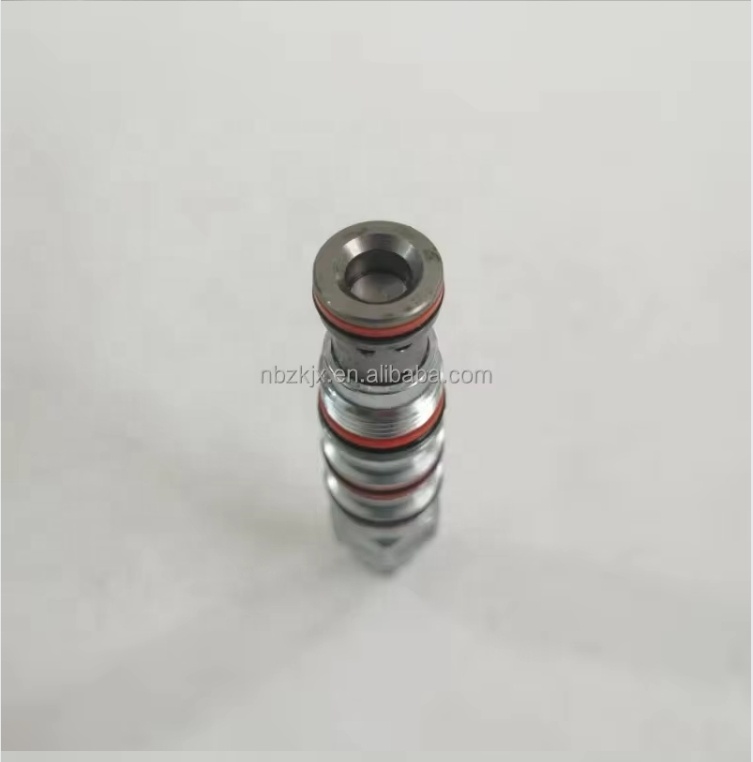
The Danfoss Pressure Transmitter MBS 1250 is recorded under OE 920147.025 MBS1250 060G1289 para KALMAR DCU80-100. Its published dimensional field is Approximate Size: 3cm3cm9.5cm, with a listed weight of 0,09 kg.
The SQM11 Speed Sensor is a separate catalog item with OE references 924015.1314 / 923976.1890 / 3408503 / 2872362 / 4326596 and an application for KALMAR DCT 80. Its published field is Size: 101010cm.
These records should remain separate because they describe different sensor types, identities, and machine applications. The difference between the source labels also matters. “Approximate Size” should remain Approximate Size, while “Size” should remain Size. Without additional documentation, neither term should be silently redefined as body dimensions, mounting-envelope dimensions, connector clearance, or another more specific engineering measurement.
For replacement work, this identity-first approach prevents a common mistake: searching by a numerical dimension and assuming that another component with similar measurements is automatically interchangeable. Dimensions become more useful after the correct product record has been established, not before.
The broader machinery component catalog context can help organize product identification, but installation compatibility still requires the technical interfaces relevant to the specific machine.
Published Dimension Records for Kalmar Sensor Applications
The verified records show how sensor dimensional information can be organized without overstating what the figures prove.
| Catalog item | OE reference | Machine application | Published dimensional field | Other published reference |
|---|---|---|---|---|
| Danfoss Pressure Transmitter MBS 1250 | 920147.025 MBS1250 060G1289 | KALMAR DCU80-100 | Approximate Size: 3cm3cm9.5cm | Peso: 0,09 kg |
| Sensor de velocidad SQM11 | 924015.1314 / 923976.1890 / 3408503 / 2872362 / 4326596 | KALMAR DCT 80 | Tamaño: 101010cm | Gross Weight: 0,2 kg |
The table is useful for identification because each dimensional value is preserved beside its own OE information and application.
It should not be read as a substitute comparison. A pressure transmitter and a speed sensor perform different sensing roles, and the catalog does not establish that their dimensions can be used to evaluate functional equivalence.
The MBS 1250 record adds application context by describing the pressure sensor for demanding hydraulic systems used in port handling and container lifting operations, including high-pressure environments and operation under harsh weather or intensive working conditions. This information helps explain the operating context of the sensor, but it does no turn the Approximate Size field into a performance rating or dimensional durability limit.
Likewise, the catalog’s statement that the pressure transmitter undergoes rigorous quality-control testing supports a general quality-control statement only. No dimensional test method, dimensional sampling plan, tolerance threshold, or acceptance criterion is published in the available evidence.
This distinction is important in procurement. A buyer may legitimately record the OE number, machine application, published dimensional wording, and weight. The same buyer should not create an undocumented tolerance, infer a connector position, or declare a component interchangeable purely from those fields.
Why Different Sensor Size Records Are Not Interchangeable
A useful example appears in the SQM11 Speed Sensor record. Its published Talla es 101010cm, while its Tamaño de envase individual is also 101010cm.
The numbers happen to match. The field meanings do not automatically become the same.
One field is explicitly labeled Size. The other is explicitly labeled Single package size. Their identical numerical values cannot justify rewriting both fields as physical sensor dimensions.
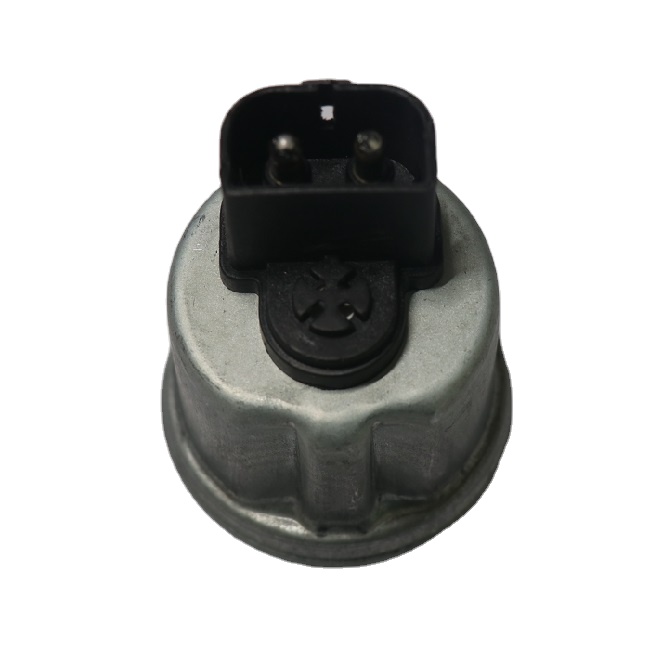
The same evidence-handling principle appears in the Temperature Control Switch record for SANY. It publishes Size: 101010cm y Single package size: 101010cm as separate fields. The record also lists temperature regulation: 65°C-70°C, which is a functional specification and should remain separate from both physical-size and packaging information.
This separation matters because catalog fields answer different questions. A product Size field may help with basic dimensional reference. A package-size field helps describe packaging. A functional temperature range describes operating behavior. An OE number establishes product identity. A machine-application field establishes catalog context.
Combining these fields without preserving their labels can create false confidence.
For example, knowing that a record says 101010cm does not establish:
- mounting-hole spacing;
- thread or port dimensions;
- electrical connector geometry;
- connector orientation;
- cable exit direction;
- installed clearance;
- sensing range;
- signal compatibility;
- mechanical attachment method.
Those details require other evidence.
Signs a Dimension Record Is Being Overextended
- A replacement is being approved from overall Size alone without verified mounting or connector information.
- A Single package size is being copied into an engineering drawing as if it were a component envelope.
- Matching numerical dimensions are being treated as proof that two different sensor identities are interchangeable.
The safest interpretation rule is simple: field meaning comes from the source label and product identity, not from the numerical value alone.
What Sensor Dimensions Cannot Confirm About Fit or Failure
The published sensor dimensions are useful references, but they do not answer every replacement or troubleshooting question.
The available records do not provide mounting geometry, electrical connector dimensions, pin configuration, clearance requirements, installation orientation, or formal interchangeability rules for the cited sensors. Consequently, a Size or Approximate Size field cannot independently prove installation compatibility.
This also limits failure analysis.
A dimensional record cannot establish that an observed sensor malfunction was caused by incorrect physical size. It cannot rank common sensor failure causes. It cannot prove that vibration, pressure exposure, weather, electrical conditions, connector problems, contamination, incorrect installation, or another mechanism caused a specific failure.
The MBS 1250 operating context includes demanding hydraulic applications and harsh conditions, but that context should not be converted into an undocumented root-cause ranking. Similarly, the general quality-control statement should not be transformed into a dimensional inspection standard that the catalog does not publish.
A practical validation sequence should therefore preserve the difference between what is known and what still needs confirmation.
- Confirm the exact sensor identity. Record the full OE reference rather than relying on a shortened description such as “pressure sensor” or “speed sensor.”
- Confirm the machine application. Keep the Kalmar model information attached to the dimensional record.
- Preserve the source dimensional label. Do not rewrite Approximate Size as an exact tolerance-controlled dimension.
- Separate product Size from Single package size. Matching numerical values do not erase the distinction between the fields.
- Request mounting-interface information when fit matters. Drawings or measurements should cover the actual mechanical interfaces used during installation.
- Verify the electrical interface independently. Sensor dimensions do not establish connector, pinout, voltage, output, or signal compatibility.
- Check installed clearance where necessary. Overall dimensional data cannot show whether surrounding structures interfere with installation.
- Keep failure diagnosis separate from dimension review. A sensor that malfunctions requires evidence appropriate to the suspected electrical, hydraulic, mechanical, environmental, or installation cause.
Items to Confirm Before Using a Sensor Dimension
- Record the complete OE number from the identified sensor.
- Match the OE number to the correct machine application.
- Copy “Size” or “Approximate Size” exactly as published.
- Keep packaging measurements in a separate documentation field.
- Obtain mounting, connector, and clearance dimensions when physical fit must be confirmed.
- Verify electrical and sensing specifications separately from physical measurements.
- Do not use matching dimensions alone as interchangeability evidence.
- Escalate unresolved fit questions to drawings or positively identified machine-side measurements.
The result is a more defensible replacement inquiry: dimensional data remains useful without being asked to prove something the source never established.
Preguntas más frecuentes (FAQ)
What criteria can rank common failure causes of sensor dimension?
The available catalog evidence does not provide a ranking of sensor-dimension failure causes. Size and Approximate Size alone cannot classify root causes. A defensible failure ranking would require evidence tied to the actual symptom and interfaces involved, such as mounting, connector, electrical, hydraulic, environmental, or installation data.
 English
 Español
 Русский