
A published filter element dimension can help you prepare for installation, but it should not be treated as complete proof of physical fit. For the catalog-listed return-line hydraulic oil filter element assembly OE 922316.0006 para KALMAR DCT 80-90, the published Approximate Size is 61.5 cm × 6 cm × 6 cm. That measurement is useful as an initial envelope reference, but the available record does not provide the mounting, sealing, clearance, or installed-position dimensions required to confirm the complete installation interface. :contentReference[oaicite:0]{index=0}
Reference Standard: Relevant hydraulic filtration, dimensional inspection, and equipment maintenance standards should be selected according to the machine manufacturer’s installation requirements and the specific filter interface being verified.
Filter Element Dimension Before Installation
Para OE 922316.0006, use the published 61.5 cm × 6 cm × 6 cm Approximate Size as a preliminary physical-size reference tied specifically to the KALMAR DCT 80-90 return-line filter application. Do not interpret that catalog value as an exact mounting specification or as proof that every sealing and clearance condition will match.
The most important installation rule is to keep the measurement connected to the correct component identity. The same catalog records that provide the approximate size identify this item as a return filter hydraulic oil filter element assembly for KALMAR DCT 80-90 equipment, with 4 kg weight, a Núcleo de filtración de elementos metálicos con carcasa resistente a la corrosión, and a documented role in return-line hydraulic oil filtration.
Those details strengthen identification, but identification and fit are different questions. A replacement can appear similar in overall length and width while still differing at the interfaces that actually determine whether it seats, seals, clears surrounding hardware, and reaches the intended installed position.
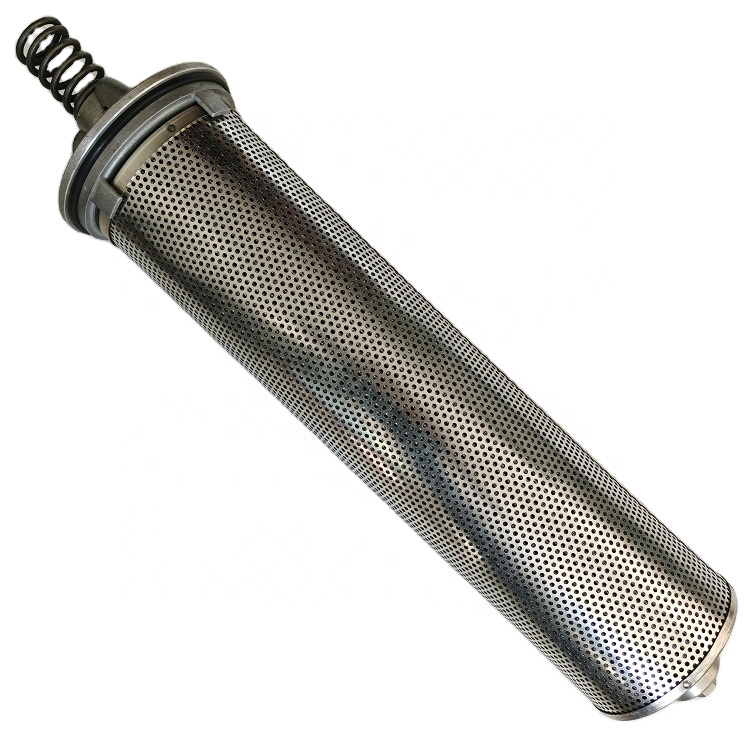
For that reason, the published approximate dimension works best as an early screening value. It can help determine whether a candidate component is broadly consistent with the expected physical scale. It cannot establish undocumented end-cap geometry, sealing diameter, locating features, engagement depth, mounting orientation, or machine-side clearance.
The practical distinction is simple: overall size can reject an obviously wrong part, but it cannot independently approve a part for installation.
Approximate Size and Package Size Serve Different Purposes
Two verified filter-element records illustrate why measurement labels must be preserved exactly.
| Catalog record | Published dimensional field | Installation meaning |
|---|---|---|
| OE 922316.0006 | Approximate Size: 61.5 cm × 6 cm × 6 cm | Useful as a preliminary physical-size reference |
| OE 922316.0007 | Single package size: 10 × 20 × 20 cm | Packaging information; not a verified filter-element dimension |
The distinction matters because a package size describes the published packaging record, not necessarily the shape or dimensions of the component inside it.
OE 922316.0007, described as a DCT hydraulic precision filter element, is recorded with a single gross weight of 2.0 kg y un single package size of 10 × 20 × 20 cm. The catalog also describes its filter element as being constructed with high-quality fibers.
Nothing in that packaging record permits the 10 × 20 × 20 cm figure to be reclassified as the physical filter-element dimension.
Likewise, dimensional similarity between two catalog entries would not prove interchangeability. The OE identity, application, filter function, interface geometry, and installed conditions must remain separate verification points.
This is especially important when dimension data moves between departments. A purchasing record may contain carton measurements, a warehouse record may contain shipping dimensions, and a maintenance note may contain hand-measured component dimensions. If those labels are stripped away, three fundamentally different measurements can appear equivalent.
A reliable installation record therefore preserves both the number and its original meaning.

Installation Details That Still Need Confirmation
The catalog provides a useful starting point, but it does not publish a complete filter element drawing or filter element assembly drawing for the installation interface.
The available specification does not establish:
- Mounting-interface dimensions
- Sealing-interface geometry
- Installed-position measurements
- Required machine-side clearances
- End-interface dimensions
- Exact locating or retention geometry
- Installation tolerances
- Complete orientation requirements
These are not minor details. They are the information that converts a broad physical-size comparison into an actual fit decision.
Consider the sealing interface. An overall filter body may fall within an expected envelope while the sealing surface differs in diameter, position, profile, or engagement geometry. In that situation, matching the external size would not establish a proper seal.
Clearance creates a similar problem. A replacement element can have a plausible overall dimension but encounter surrounding structures during insertion or removal. The catalog’s approximate size does not document that installation path.
The same principle applies to the filter element installation position. The verified application tells us that OE 922316.0006 is used for KALMAR DCT 80-90 return-line hydraulic oil filtration, but the available record does not specify a complete installed-position measurement set.
Hydraulic return-line filtration also explains why correct identification matters operationally. The source material describes return oil as potentially carrying metallic particles, dust, sludge, water traces, dirt, and oil-degradation residues. Such contamination can contribute to component wear, reduced efficiency, pump or valve problems, and downtime.
That system context supports careful filter selection. It does not create missing fit dimensions.
Fit-Check Warning Signs
- A package-size field is being treated as though it were the component’s physical dimension.
- A dimensional comparison is being made without first confirming the OE reference and KALMAR application.
- Installation approval depends on sealing, mounting, or clearance details that are absent from the available specification.
Preparing a Filter Element Fit Check Without Guessing
A useful installation-readiness process should progressively narrow uncertainty instead of converting incomplete data into assumed specifications.
1. Lock the Part Identity Before Comparing Dimensions
Start with the exact OE reference. For the verified return-line filter example, that means 922316.0006 and its documented KALMAR DCT 80-90 application.
Record the component description together with the OE number instead of saving the dimension alone. This prevents the 61.5 cm × 6 cm × 6 cm figure from becoming detached from the part for which it was actually published.
Also separate OE 922316.0006 from OE 922316.0007. They are distinct catalog records with different published fields. One record provides an Approximate Size; the other provides a Single package size.
This identity-first approach costs little, but it prevents a common documentation problem: a valid measurement being used for the wrong component.
2. Preserve the Measurement Label
Record Approximate Size: 61.5 cm × 6 cm × 6 cm rather than simplifying it to “dimensions.”
The word “Approximate” is part of the evidence. Removing it changes the meaning by implying a level of dimensional precision that the source does not provide.
The same rule applies to Single package size: 10 × 20 × 20 cm for OE 922316.0007. Preserve the package label so that nobody later treats the shipping record as a filter-body measurement.
This practice improves traceability across purchasing, maintenance, warehouse, and technical review documents. It also makes later comparison easier because everyone can see what each number actually represents.
3. Use the Published Size as an Envelope Check
For OE 922316.0006, the published approximate size can be used to determine whether a candidate part is broadly consistent with the documented physical scale.
That is a useful screening function. If an unidentified component clearly falls outside the documented envelope, the discrepancy should be resolved before installation proceeds.
The reverse conclusion is not valid. A part that appears close to the published approximate size has only passed an initial dimensional screen. It has not yet demonstrated matching sealing geometry, mounting interfaces, retention features, or installation clearance.
The value of the envelope check is therefore in reducing obvious mismatch risk, not in replacing a proper fit verification.
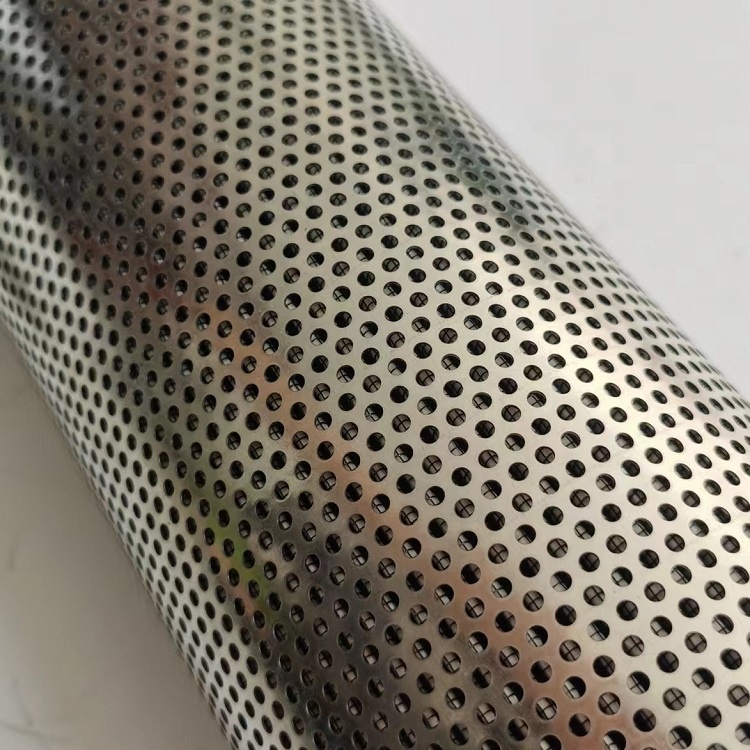
4. Escalate Missing Interface Data Before Declaring Fit
Before treating dimensional similarity as installation proof, identify every interface that still lacks verified information.
A filter element fit review should ask whether the available documentation establishes the sealing surfaces, engagement points, mounting geometry, installed position, and clearance needed for insertion and service.
When those records are unavailable, the correct result is not to invent dimensions. The result is to flag the installation interface for independent confirmation using positively identified technical documentation or machine-side measurements.
This approach is particularly useful when sourcing replacement components through a general machinery-parts workflow. The objective is not to accumulate the largest possible list of measurements. The objective is to distinguish verified information from unresolved fit-critical information.
For broader machinery component information and related product records, buyers can also review the Ningbo Beilun Zhenke Machinery Equipment resource site while keeping each catalog specification tied to its original part identity and application.
Items to Confirm Before Installation
- Confirm the exact OE number before using any dimensional record.
- Verify that the machine application matches the intended KALMAR DCT 80-90 service context where applicable.
- Preserve “Approximate Size” exactly when recording the 61.5 cm × 6 cm × 6 cm value.
- Never substitute the 10 × 20 × 20 cm package record for a physical filter-element dimension.
- Request or verify sealing-interface geometry when the installation depends on a specific sealing surface.
- Confirm mounting or locating features that are not represented by the overall envelope measurement.
- Check available machine-side clearance information before assuming that a similarly sized element can be inserted or removed.
- Keep documented product dimensions, packaging measurements, weights, and application information in separate fields.
- Treat dimensional similarity as an initial screening result, not final compatibility approval.
- Record unresolved interface data explicitly instead of filling gaps with estimated dimensions.
Preguntas más frecuentes (FAQ)
What differences should be checked when comparing two filter element dimension specifications?
Compare the measurement label, OE identity, application, and dimensional context before comparing the numbers themselves. An Approximate Size can support a preliminary component-envelope comparison, while a package-size field describes packaging. Matching numbers do not prove identical mounting, sealing, clearance, or installed-position requirements.
Can an approximate filter element size confirm installation compatibility?
No. The published approximate size of OE 922316.0006 can support an initial physical-size check, but complete compatibility also depends on interface information that is not provided in the available record, including sealing geometry, mounting dimensions, installed-position measurements, and clearance data.
 English
 Español
 Русский