
Reference Standard: Relevant dimensional, electrical, and performance testing standards should be selected only after the exact potentiometer specification and required verification method are available.
The published record can identify the Heavy-Duty Throttle Potentiometer Accelerator Position Sensor A32460.0100 / 0206001010 para KALMAR DCE 80-100/45E, but it does not establish a potentiometer dimension. It lists the DT04-6P HD3061Y-1.6-11 plug model and a 0,3KG weight, yet neither field can be converted into length, width, height, shaft geometry, mounting dimensions, or installation clearance. :contentReference[oaicite:0]{index=0}
The Published Potentiometer Dimension Is Not Specified
The first troubleshooting step is to distinguish documented product identity from missing dimensional data.
For this catalog-listed item, the documented identity includes:
- OE and model reference: A32460.0100 / 0206001010
- Machine application: KALMAR DCE 80-100/45E
- Characteristic reference: DCE 80-100/45E A32460.0100
- Plug model: DT04-6P HD3061Y-1.6-11
- Peso: 0,3KG
The available evidence explicitly states that no potentiometer dimension is published. The evidence rules also prohibit turning unrelated catalog fields into unreported dimensions, tolerances, materials, performance limits, or other specifications. :contentReference[oaicite:1]{index=1}
That distinction matters because several values can look dimension-related without actually being dimensions. A plug designation identifies a connector model; it does not tell the reader the overall body length or mounting pattern of the potentiometer. Weight describes mass; it cannot establish geometry. A machine application identifies the equipment context; it does not define the physical envelope of the sensor.
Even a photograph is insufficient for precision dimensional verification unless it contains a reliable scale and the exact component identity has already been established.
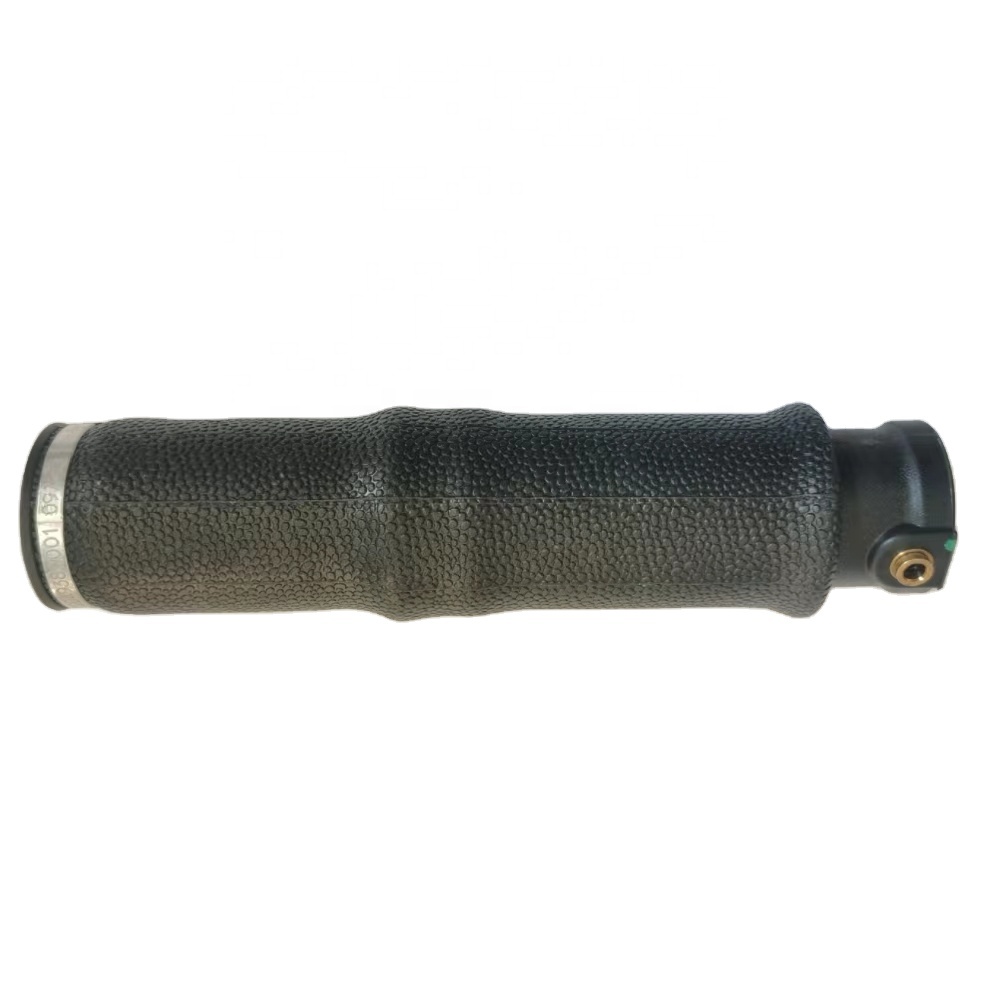
The practical rule is simple: a missing dimension must remain missing until a traceable dimensional source is obtained. Guessing may create a number that looks useful, but it does not create defensible compatibility evidence.
Confirm Part Identity Before Measuring Anything
A dimension measurement becomes meaningful only when it is attached to the correct component identity.
For this potentiometer, a dimensional inquiry should preserve the complete reference chain: A32460.0100 / 0206001010, KALMAR DCE 80-100/45E, and the documented DT04-6P HD3061Y-1.6-11 plug model. This prevents a measurement from a visually similar sensor, another throttle-position device, or an unidentified replacement part from being silently treated as the specification of the catalog-listed item. :contentReference[oaicite:2]{index=2}
A useful dimensional verification process therefore separates three questions:
-
Is the reference part positively identified?
Confirm the OE/model references and machine application before recording geometry. -
Where did the measurement come from?
A manufacturer drawing, controlled product specification, or positively identified physical reference part provides a traceable basis. An unlabeled photograph or unrelated marketplace listing does not provide the same confidence. -
What dimension is actually being requested?
“Potentiometer dimension” can refer to several different interfaces. A buyer may need overall housing dimensions, mounting-hole spacing, shaft geometry, connector clearance, body diameter, installation depth, or another interface-specific measurement. These should be requested by name instead of reduced to a single undefined “size.”
This is especially important for replacement inquiries. Two devices may appear similar while differing at the mounting, shaft, connector, or clearance interface. Conversely, two housings may look different while still serving the same system function. Appearance alone cannot settle dimensional compatibility.
En machinery component information published by Ningbo Beilun Zhenke Machinery Equipment Co., Ltd. can provide product-context references, but the dimensional decision for this item still requires evidence tied specifically to the identified potentiometer.
Signs That the Dimension Inquiry Needs More Evidence
- A measurement is supplied without the A32460.0100 / 0206001010 identity attached to it.
- A connector designation or 0,3KG weight is being treated as evidence of physical geometry.
- The required mounting, shaft, body, or clearance dimension has not been named explicitly.
Throttle Symptoms Do Not Prove a Dimensional Mismatch
Functional symptoms and dimensional verification belong to different troubleshooting paths.
The supplied product context notes that a faulty potentiometer may be associated with inaccurate throttle readings, poor or sluggish acceleration, reduced fuel efficiency, increased emissions, erratic engine behavior, or an illuminated check-engine light. It also describes a general operating environment involving frequent movement, heat, and vibration. :contentReference[oaicite:3]{index=3}
Those observations are useful for understanding why a throttle potentiometer may require investigation, but none of them proves that the installed component has the wrong dimensions.
In general, a potentiometer is an electromechanical sensing device. Its electrical output depends on the relationship between mechanical movement and the resistive or sensing element inside the device. Wear, vibration, thermal cycling, contamination, electrical connection problems, or other deterioration mechanisms can potentially affect signal behavior without changing the external housing dimensions.
The reverse is also important. A component can be dimensionally unsuitable even before any obvious throttle symptom is observed. A mounting or interface discrepancy is a mechanical compatibility question; an unstable or inaccurate signal is an electrical and functional question.
This creates two separate verification tracks:
| Question | Evidence Needed | What Does Not Prove It |
|---|---|---|
| Is the component dimensionally suitable? | Traceable drawing or positively identified physical measurements | Weight, throttle symptoms, plug name alone |
| Is the potentiometer functioning correctly? | Applicable electrical specifications and a documented test method | External dimensions alone |
| Is the part identity correct? | OE/model, machine application, connector and other documented identity fields | Visual resemblance alone |
Keeping these tracks separate prevents a common diagnostic error: discovering a throttle problem and assuming that the replacement component must have an incorrect physical size.
The source provides no company-specific failure diagnosis, electrical acceptance threshold, dimensional failure threshold, factory QC process, or proprietary test procedure for this item. Those values should not be manufactured to make the troubleshooting process appear more complete. :contentReference[oaicite:4]{index=4}
Evidence Needed to Complete a Potentiometer Dimension Check
A defensible dimension check requires traceable dimensional information tied to the verified product identity.
The strongest completion sources are typically an applicable product drawing, an explicit dimensional specification, or physical measurements from a reference part that has been positively identified as the same component. The current catalog information supports the identity of the item but does not provide those measurements.
A practical request for additional dimensional information should specify exactly what must be checked.
Items to Confirm Before Accepting a Dimension
- Confirm the reference is A32460.0100 / 0206001010.
- Confirm the intended application is KALMAR DCE 80-100/45E.
- Record the documented DT04-6P HD3061Y-1.6-11 plug model as an identity field, not as a dimension.
- Identify whether the required measurement concerns the housing, mounting interface, shaft, connector clearance, installation depth, or another feature.
- Record the source of every measurement, such as a controlled drawing or positively identified reference part.
- Keep units and measurement labels attached to every value instead of reducing several measurements to a generic “size.”
- Do not derive geometry from the 0,3KG weight.
- Flag any dimensional value whose product identity or measurement origin cannot be verified.
If measurements are taken from an installed reference component, the measuring record should clearly identify the feature being measured. For example, “overall length” and “mounting-hole center distance” answer different engineering questions. A single unlabeled number may be unusable even when the physical measurement itself is accurate.
The same principle applies to connector-related measurements. The published plug model can help preserve component identity, but the source does not state connector-interface dimensions. If connector width, locking geometry, terminal arrangement, or installation clearance is important, those values need their own documented evidence.
Shaft geometry requires the same discipline. Shaft diameter, engagement length, flat geometry, rotational indexing, or other mechanical interface details should not be inferred merely because the part is described as a throttle potentiometer. The available record does not publish those parameters.
This approach may feel slower than using a guessed dimension, but it reduces the risk of comparing unrelated measurements. It also creates a cleaner technical inquiry: instead of asking for an undefined potentiometer size, the buyer can request the exact missing interface dimensions while preserving the verified identity information already available.
Performance Testing and Dimension Verification Are Separate
A reader may reasonably ask whether a test procedure can confirm the potentiometer dimension indirectly. It cannot.
Performance testing evaluates how the device behaves. Dimensional inspection evaluates physical geometry. A complete replacement assessment may eventually require both, but one does not substitute for the other.
A general potentiometer performance test would normally require an applicable electrical specification defining what is to be measured and what constitutes acceptable behavior. Depending on the design, that could involve checking electrical continuity, output progression through the operating range, connection integrity, or signal stability. However, the supplied product record does not publish the electrical limits, test voltage, acceptable output curve, resistance specification, test equipment configuration, or acceptance criteria for A32460.0100 / 0206001010.
Therefore, prescribing numeric electrical thresholds would exceed the available evidence.
The same caution applies to dimensional inspection. Without a controlled drawing or documented dimensional specification, there is no published catalog tolerance against which a measured housing, shaft, mounting point, or connector clearance can be judged.
The useful troubleshooting sequence is consequently:
Identify the exact component → define the missing dimension → obtain traceable dimensional evidence → compare the correct interface → conduct functional testing under an applicable documented electrical specification when required.
This keeps identity, geometry, and performance from being mixed into one unsupported conclusion.
Preguntas más frecuentes (FAQ)
What test procedure verifies potentiometer dimension performance?
The supplied record does not provide a product-specific dimensional or electrical test procedure for A32460.0100 / 0206001010. Dimension verification requires traceable dimensional specifications or measurements, while performance verification requires the applicable electrical limits and acceptance criteria. Neither should be invented from the published weight, connector model, or throttle symptoms.
 English
 Español
 Русский